
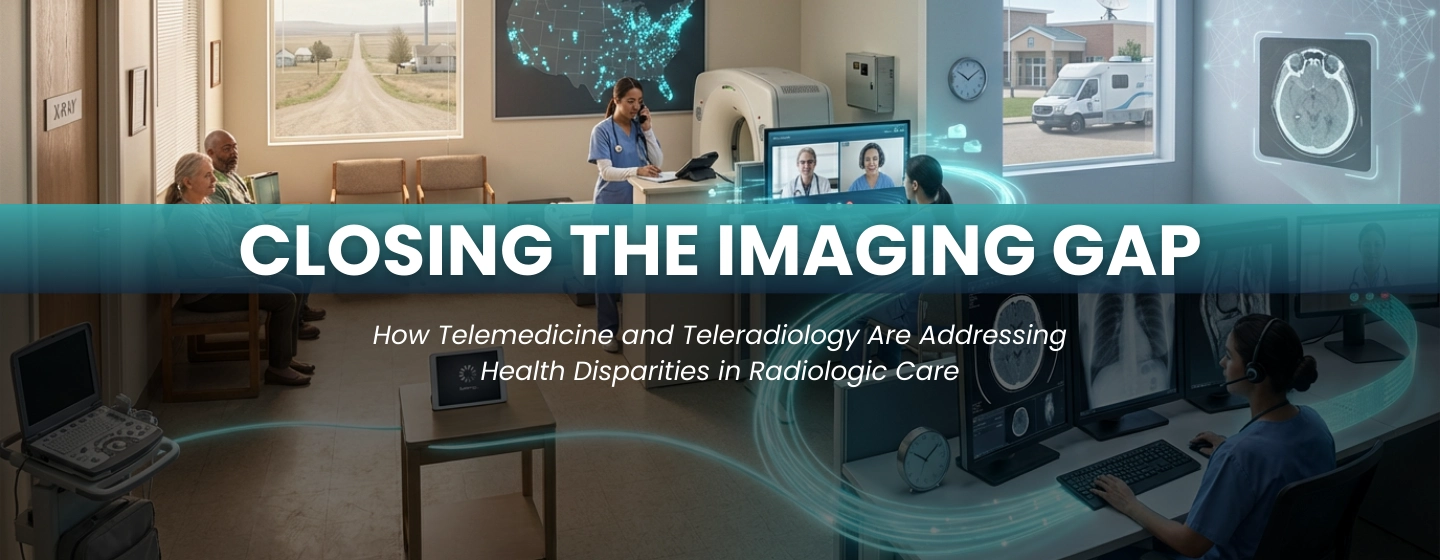
Closing the Imaging Gap: How Telemedicine and Teleradiology Are Addressing Health Disparities in Radiologic Care





Learning Objectives
Upon completion of this article, the radiologic professional will be able to:
- Identify key health disparities that affect access to diagnostic imaging, including geographic, socioeconomic, and technological factors.
- Explain how urban–rural workforce distribution and infrastructure limitations contribute to inequities in radiologic care.
- Describe the role of telemedicine and teleradiology in expanding imaging access, care coordination, and subspecialty services for underserved populations.
- Discuss the impact of teleradiology on reducing health disparities through improved turnaround times and continuity of care.
- Evaluate current challenges and future strategies for improving radiologic access and equity, and emerging technologies such as artificial intelligence.
- Abstract
- Understanding Health Disparities in Radiologic Care
- The Urban–Rural Imaging Access Gap
- Telemedicine’s Role in Expanding Imaging Access
- Benefits of Teleradiology in Reducing Health Disparities
- Timely Expert Interpretation
- Expanded Subspecialty Access
- Continuity of Care & Enhanced Collaboration
- Cost-Effectiveness
- Limitations and Challenges
- The Patient-Access Equation
- Future Directions in Radiologic Access and Equity
- Conclusion
- References
Abstract
Health disparities in radiologic care, including geographic, socioeconomic, and infrastructure barriers, contribute to uneven access to diagnostic imaging across populations. Telemedicine and teleradiology have emerged as innovative tools to reduce these disparities by expanding imaging access, facilitating remote interpretation, and improving care continuity. This article examines the evidence and strategies supporting telemedicine and teleradiology as mechanisms to narrow the imaging gap within radiologic care, evaluates benefits and limitations, explores the patient-access equation, and discusses future directions for advancing equitable imaging services.
Understanding Health Disparities in Radiologic Care
Health disparities in radiologic care refer to unequal access to imaging services and diagnostic quality across different patient populations. These disparities are often influenced by geographic location, socioeconomic status, insurance coverage, and availability of imaging technology and trained personnel. Rural and underserved urban communities frequently experience limited access to advanced imaging modalities, longer wait times, and fewer subspecialty radiologists, which can delay diagnosis and treatment. Additionally, barriers such as transportation challenges, digital literacy gaps, and limited broadband access further restrict the effective use of imaging and telehealth services. Understanding these factors is essential for radiologic professionals seeking to promote equitable imaging access and improve patient outcomes. The following areas are further defined:
Workforce distribution: Radiologists and subspecialists are concentrated in urban and academic centers, leaving rural areas with minimal specialist coverage, especially in underdeveloped countries. Workforce shortages intensify diagnostic backlogs and reduce the availability of advanced imaging interpretations.
Socioeconomic barriers: Patients with limited or no insurance coverage, low income, or low health literacy may give up imaging or experience delayed examinations due to cost and/or limited referrals. Socioeconomic barriers, including transportation difficulties and lower insurance coverage rates, further restrict access to imaging services for rural populations (U.S. National Library of Medicine [NLM], 2023).
Systemic infrastructure gaps: Disparities in digital access and broadband connectivity reduce the effectiveness of telemedicine in underserved areas in the United States as well as abroad, perpetuating care gaps.
These disparities are not only present in rural environments but also among minority and low-resource urban communities, where similar obstacles in access and utilization of imaging services exist. Addressing these structural issues is critical to reducing morbidity and mortality linked to delayed diagnoses.
| Driver | Impact on Imaging Access | Implications for Patient Care |
|---|---|---|
| Geographic Location | Limited proximity to imaging centers | Delayed diagnosis and treatment |
| Workforce Shortages | Lack of onsite radiologists and/or technologists | Extended turnaround times |
| Socioeconomic Status | Reduced or no insurance coverage | Deferred or forgone imaging |
| Digital Access | Limited broadband or devices | Reduced telemedicine utilization |
Table 1 Key Drivers of Health Disparities in Radiologic Care.
The Urban–Rural Imaging Access Gap
One of the most well-documented aspects of imaging disparities is the urban–rural divide. Rural residents often reside significant distances from imaging centers equipped with advanced modalities such as CT and MRI, and they may lack access to subspecialty interpretations locally. For example, rural populations represent substantial screening-eligible groups (e.g., for lung cancer), yet demonstrate markedly lower proximity to screening centers when compared with urban populations.
Research on telemedicine use among cancer survivors found that rural patients had significantly lower odds of telehealth utilization compared with those in metropolitan areas. This underscores rural inequity even when telehealth services are available.
This uneven distribution of imaging resources contributes to delayed diagnoses, higher disease severity when found, and greater travel burdens for rural patients. These outcomes are associated with poorer overall health outcomes and amplify the need for remote imaging strategies.
| Characteristic | Urban Settings | Rural Settings |
|---|---|---|
| Radiologist Availability | high | Limited |
| Advanced Imaging Access | Readily available | Often limited/ or absent |
| Turnaround Time | Short | Extended without teleradiology |
| Patient Travel Distance | Minimal | Significant |
Table 2 Comparison of Urban and Rural Imaging Access.
Telemedicine’s Role in Expanding Imaging Access
Telemedicine broadly includes healthcare delivery via digital technologies and has rapidly expanded since the COVID-19 pandemic. Within radiology, telemedicine initiatives contribute to:
- Remote consultations: Primary care providers and specialists can integrate virtual radiology recommendations into clinical care without requiring patients to travel for in-person imaging consultations
- Follow-up care and triage: Virtual visits and asynchronous communication (any message exchange where the sender and receiver don’t need to be present or respond at the same time) can help determine the necessity and urgency of imaging, reducing unnecessary travel and optimizing resource utilization.
- Integration with clinical workflows: Telemedicine platforms linked with electronic health records (EHRs) and patient Picture Archiving and Communication System (PACS) allow clinicians to access imaging and reports seamlessly, improving care coordination. PACS is a digital technology that securely stores, retrieves, manages, and distributes medical images (like X-rays, CTs, MRIs) and their reports.

Some evidence reveals that telemedicine visits are associated with reductions in imaging utilization compared to in-person visits, which may reflect more targeted imaging orders. However, further research is required to evaluate whether these utilization patterns correlate with clinical outcomes or reflect barriers to necessary imaging.
Despite these findings, telemedicine remains an important aid across specialties, enabling remote physician–patient interactions that better share imaging resources across diverse populations.
Benefits of Teleradiology in Reducing Health Disparities
eleradiology enhances imaging equity by providing continuous access to radiologist interpretation regardless of location. It supports subspecialty consultation, reduces diagnostic delays, and improves workflow efficiency for understaffed facilities, especially in underdeveloped countries.
| Benefit | Clinical Impact | Equity Outcome |
|---|---|---|
| 24/7 Coverage | Rapid interpretation | Reduced care delays |
| Subspecialty Access | Improved diagnostic accuracy | Equitable expertise distribution |
| Reduced Transfers | Local patient care | Lower financial burden |
| Workflow Efficiency | Optimized staffing | Sustainable rural imaging |
Table 3: Impact of Teleradiology on Radiologic Equity
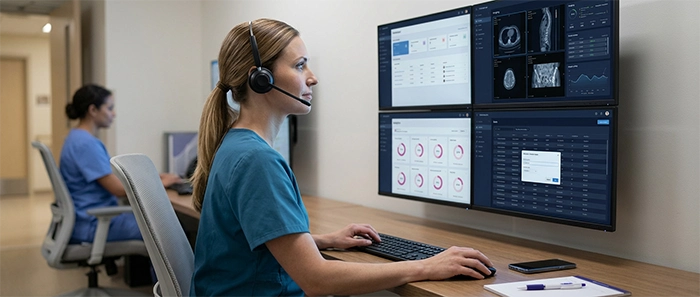
Teleradiology: the remote transmission of imaging studies for interpretation, is a core strategy for mitigating geographic and workforce barriers:

- Timely Expert Interpretation: Teleradiology ensures that imaging studies acquired at remote or under-resourced facilities are interpreted by board-certified radiologists, often within reduced turnaround times. Rural hospitals without on-site radiologists can upload studies to specialists elsewhere, lessening diagnostic delays that would otherwise occur due to travel or understaffing.

- Expanded Subspecialty Access: Through teleradiology, facilities in remote regions can connect with subspecialized radiologists (e.g., neuroradiology, breast imaging), elevating local diagnostic quality and reducing disparities in access to advanced interpretations. For example, referring clinicians in rural German settings consistently ranked teleradiology as a crucial element for enhancing imaging access, even above more traditional local service expansion.

- Continuity of Care & Enhanced Collaboration: Remote radiology networks enable better coordination between radiologists and front-line clinicians, facilitating second opinions and longitudinal case discussions. These collaborative workflows improve clinical decision-making and can strengthen local care capacity.

- Cost-Effectiveness: For rural hospitals and clinics with limited budgets, teleradiology reduces the need for full-time on-site radiologists, offering scalable access to radiologic services without prohibitive staffing expenditures.
Taken together, these benefits support more equitable distribution of imaging expertise and create opportunities for radiology departments to support underserved populations more effectively.
Limitations and Challenges
Despite its promise, telemedicine and teleradiology face multiple challenges that can limit effectiveness if not addressed thoroughly:

- Infrastructure and Connectivity Barriers: Many rural and socioeconomically disadvantaged regions lack reliable broadband infrastructure and digital devices, impairing telemedicine and image transmission quality. High-resolution imaging data require robust networks, which may be sparse in resource-limited areas. Internet access in many low-income countries can often be unreliable or not function for many hours in the day or evening.

- Policy and Regulatory Challenges: Licensure requirements, reimbursement limitations, and regulatory complexity continue to restrict the expansion of cross-state and cross-border teleradiology services. Although multi-state licensure compacts have improved provider mobility and coverage, inconsistencies in telehealth reimbursement policies and the need for broader payment reform remain significant barriers to sustaining equitable access to imaging services.

- Communication and Integration Concern: In some settings, teleradiology adoption is limited by clinical communication barriers and technical concerns. Studies in Germany revealed hesitancy among providers due to perceived lack of direct communication with remote radiologists and concerns about technical implementation.

- Digital Literacy and Health Equity: Populations with limited digital literacy or access may not benefit equally from telemedicine services, even when available. This digital divide can unintentionally deepen inequities if not actively mitigated through tailored support and education.
The Patient-Access Equation
Patient access to imaging is shaped by a difficult relationship of structural, socioeconomic, and health system factors:
- Geographic distance and travel constraints: Patients living hours from advanced imaging facilities experience financial and logistical barriers that can delay diagnoses.
- Insurance and financial obstacles: Out-of-pocket costs, coverage limitations, and variable reimbursement influence the patient’s ability to seek imaging, especially in rural areas.
- Digital inclusion: Access to telemedicine is affected by internet availability, device ownership, and digital literacy, all of which vary across demographic groups.
Understanding these factors is essential for designing equitable imaging services. Solutions such as community broadband initiatives, patient digital literacy programs, and targeted telehealth reimbursement innovations can help align telemedicine with patient needs.
Future Directions in Radiologic Access and Equity
To effectively close the imaging gap, future strategies should include:
- Advancing Technology and AI Integration: Artificial intelligence has the potential to enhance teleradiology by assisting in lesion detection, workflow prioritization, and diagnostic triage, particularly in settings with limited radiologist availability. These innovations must be developed and validated with equity in mind to avoid algorithmic bias and ensure inclusive performance.
- Policy Reform and Reimbursement Innovation: Policies that support telemedicine reimbursement parity, streamlined licensure, and cross-jurisdiction telehealth standards can expand access to teleradiology and reduce barriers to implementation.
- Infrastructure Investment Collaborative: Public-private investment in broadband connectivity and digital infrastructure is essential to extend telemedicine access to underserved regions.
- Equity-Focused Implementation Frameworks: Healthcare systems must adopt frameworks that prioritize equity in telemedicine deployment, incorporating patient feedback, community engagement, and data collection on utilization patterns by demographic group.
Conclusion
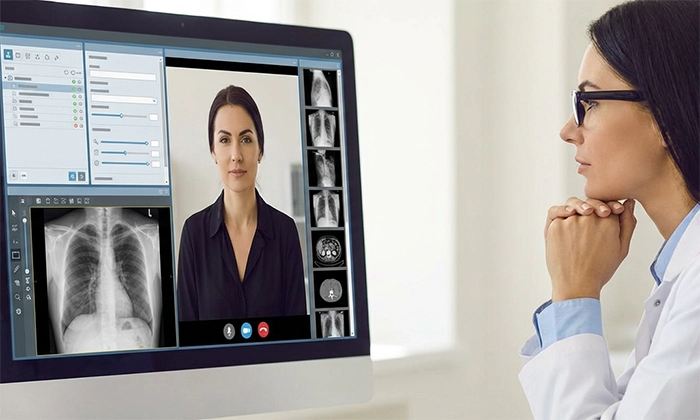
Telemedicine and teleradiology are powerful strategies for addressing longstanding disparities in radiologic care by expanding access, enhancing specialist interpretation, and improving care coordination. While challenges still remain, including infrastructure gaps, regulatory hurdles, and digital inequities, evidence supports the capacity of these technologies to bring high-quality imaging services to populations traditionally underserved by the healthcare system, both in the United States and abroad.
For radiologic professionals and healthcare systems dedicated to advancing equitable care, active engagement in policy advocacy, strategic investment in infrastructure and workforce training, and the thoughtful integration of telemedicine are essential. By implementing patient-centered telehealth models that reflect community needs and local contexts, the diagnostic imaging access gap can be reduced, supporting the goal of equitable, high-quality imaging services for all patient populations.
References (U.S. sources)
- Intelerad. (2025). The workforce crisis: Why teleradiology is becoming essential.
- Klenske, N. (2021). Rural areas face imaging obstacles on the road to healthcare equity. RSNA.
- [PubMed source on MS imaging disparities]. (2025).
- Teleradiology Consultants. (2024). Improving rural healthcare with teleradiology.
- AAG Health. (2025). Teleradiology trends and industry changes.
- Journal of the American College of Radiology (Chung et al., 2025).
- Reschke, P., et al. (2025). Radiology access in rural Germany: A nationwide survey.
- Hasan, J., et al. (2024). Bridging the gap: Teleradiology in rural healthcare.
- Elmohr, M. M. (2024). Social determinants of health framework in radiology.
Disclaimer: The information provided on this website is intended to provide useful information to radiologic technologists. This information should not replace information provided by state, federal, or professional regulatory and authoritative bodies in the radiological technology industry. While Medical Professionals strives to always provide up-to-date and accurate information, laws, regulations, statutes, rules, and requirements may vary from one state to another and may change. Use of this information is entirely voluntary, and users should always refer to official regulatory bodies before acting on information. Users assume the entire risk as to the results of using the information provided, and in no event shall Medical Professionals be held liable for any direct, consequential, incidental or indirect damages suffered in the course of using the information provided. Medical Professionals hereby disclaims any responsibility for the consequences of any action(s) taken by any user as a result of using the information provided. Users hereby agree not to take action against, or seek to hold, or hold liable, Medical Professionals for the user’s use of the information provided.