
The Expanding Role of Radiologic Technologists in Healthcare Research





- Introduction
- Institutional Support for Allied Health Research
- Radiologic Technologists: Supporting and Leading Clinical Research
- Expanding Research Training for Radiologic Technologists
- Research Infrastructure and Institutional Support in the United States
- Why It Matters for the Profession
Introduction
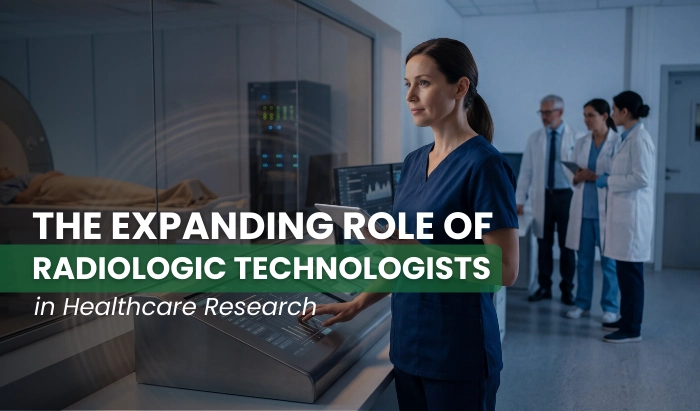
Healthcare research is no longer confined to physicians and academic investigators. Across the United States, healthcare systems increasingly rely on data-driven protocols, measurable outcomes, and evidence-based practice to guide patient care. Within this evolving landscape, radiologic technologists are stepping into a broader professional role, one that extends beyond image acquisition and into the generation and application of clinical evidence.
As imaging technologies grow more advanced and healthcare shifts toward quality metrics and value-based care, radiologic technologists are uniquely positioned to contribute to research that improves imaging quality, radiation safety, workflow efficiency, and diagnostic performance. What was once viewed as outside the traditional scope of practice is now emerging as a meaningful pathway for professional growth and leadership within medical imaging.
Institutional Support for Allied Health Research
Healthcare systems around the world are increasingly recognizing the value of research led by allied health professionals. In 2011, France formalized this approach through the Hospital Program for Nursing and Allied Health Research (Programme hospitalier de recherche infirmière et paramédicale – PHRIP), a national funding mechanism dedicated to clinical research conducted by non-physician healthcare professionals.
Although specific to the French healthcare system, the underlying structure closely resembles funding pathways familiar in the United States, such as federally funded grants, institution-supported research initiatives, and academic medical center programs that empower allied health professionals to investigate and improve patient care practices.
The program emerged alongside academic reforms aligning healthcare education with the Bachelor’s–Master’s–Doctoral framework, strengthening the scientific foundation of allied health professions. This evolution reinforced an important principle: professionals such as radiologic technologists are not only technical experts but also capable of generating clinical evidence.
Since its launch, multiple technologist-led projects have received national funding, addressing imaging quality, radiation dose optimization, patient safety, workflow efficiency, and diagnostic performance. The broader message is clear: when institutional structures provide protected research time, mentorship, and grant opportunities, radiologic technologists can successfully design and lead impactful clinical investigations.
As healthcare increasingly prioritizes measurable outcomes and interdisciplinary collaboration, institutional support becomes a critical catalyst for expanding the professional role of imaging specialists.
Radiologic Technologists: Supporting and Leading Clinical Research
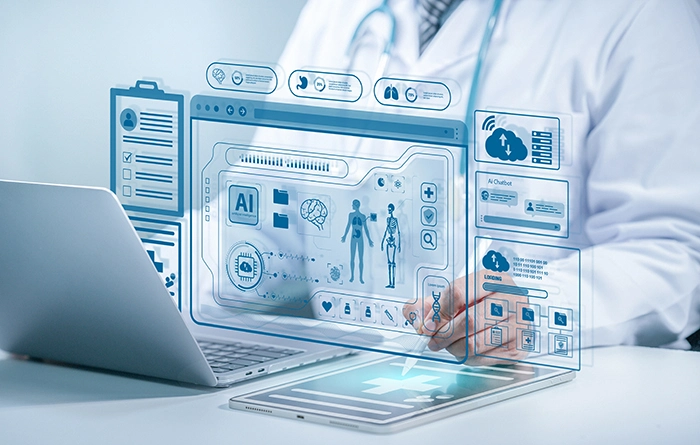
Radiologic technologists play an essential role in supporting clinical research by applying their expertise in medical imaging across modalities such as X-ray, CT, MRI, and ultrasound. Their understanding of imaging protocols, radiation dose management, patient positioning, workflow coordination, and image quality control helps ensure that research studies are executed accurately, consistently, and in compliance with regulatory standards.
Beyond supporting physician-led or industry-sponsored trials, radiologic technologists are also increasingly designing and leading their own research initiatives. One example from Europe involved a technologist-led project focused on improving the radiographic detection of traumatic bone injuries in the extremities. The study secured national funding, expanded to multiple hospitals, and demonstrated measurable clinical impact.
Learn more about this study here
While earlier examples illustrate how imaging professionals can lead research internationally, similar and even larger opportunities exist within the United States. A prominent example is the U.S. Radiologic Technologists (USRT) Cohort Study, led by the National Cancer Institute in collaboration with the American Registry of Radiologic Technologists (ARRT). This long-running epidemiologic study follows more than 140,000 radiologic technologists to evaluate occupational radiation exposure and long-term health outcomes. Its findings have directly informed radiation safety standards, occupational monitoring practices, and public health policy.
In the United States, research initiatives such as the U.S. Radiologic Technologists (USRT) Cohort Study, led by the National Cancer Institute in collaboration with the American Registry of Radiologic Technologists (ARRT), highlight the profession’s central role in advancing imaging science. This large-scale epidemiologic study follows more than 140,000 technologists to evaluate occupational radiation exposure and long-term health outcomes, contributing to improvements in radiation safety standards and public health policy.
Learn more about this study here
More broadly, radiologic technologists across the U.S. engage in IRB-approved clinical studies, quality improvement initiatives, radiation dose optimization projects, and interdisciplinary collaborations with radiologists, medical physicists, and healthcare administrators. As healthcare increasingly emphasizes measurable outcomes and safety benchmarks, technologists are well positioned to move from research support roles into research leadership.
By identifying clinical challenges within imaging practice and contributing to structured investigation, they can directly influence patient safety, imaging quality, and evidence-based standards of care.
Expanding Research Training for Radiologic Technologists
Historically, formal research training was not a core component of most radiologic technology programs in the United States. Entry-level education focused primarily on clinical competency, image acquisition, radiation safety, and patient care. As a result, many technologists interested in research often developed their skills informally, learning through participation in departmental quality improvement initiatives, collaborative studies, or mentorship within academic medical centers.
Today, that landscape is evolving. Many U.S. institutions now offer Bachelor’s and Master’s degree programs in Radiologic Sciences that include coursework in research methodology, biostatistics, evidence-based practice, and scholarly writing. Graduate-level programs, such as the Master of Science in Radiologic Sciences (MSRS) or related health sciences degrees, frequently require a capstone research project, thesis, or quality improvement study, providing structured pathways for technologists to design and conduct original investigations.
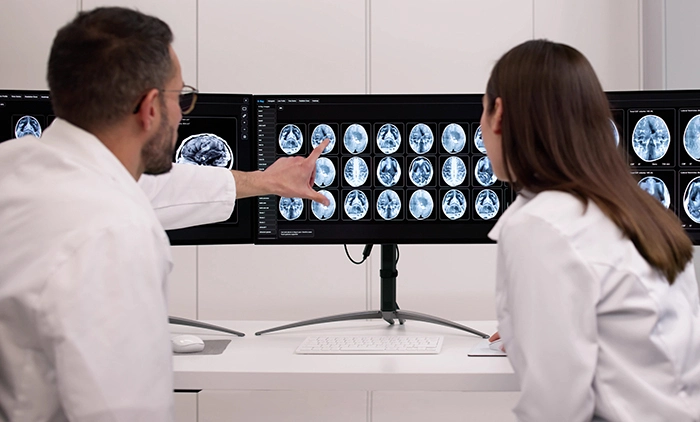
In addition, technologists working in university-affiliated hospitals increasingly have access to research infrastructure, including Institutional Review Board (IRB) support, data analytics teams, and interdisciplinary mentorship from radiologists, medical physicists, and healthcare researchers. These structures create opportunities for imaging professionals to move beyond technical execution and actively participate in study design, data interpretation, and scholarly dissemination.
For radiologic technologists with a desire to expand their professional impact, research is no longer an abstract concept; it is an attainable and structured pathway for leadership, academic advancement, and meaningful contributions to evidence-based imaging practice.
Research Infrastructure and Institutional Support in the United States
In the United States, clinical research is supported through a well-established infrastructure that spans academic medical centers, federally funded institutions, professional societies, and healthcare systems. Unlike centralized national programs, research initiatives are typically embedded within universities, teaching hospitals, integrated health networks, and collaborative research consortia.
Academic medical centers play a central role by providing Institutional Review Boards (IRBs) grant development offices, biostatistical support, and interdisciplinary research mentorship. Within these environments, radiologic technologists may participate in or lead imaging-focused studies related to radiation dose optimization, protocol standardization, workflow efficiency, artificial intelligence integration, and patient safety initiatives.
Additionally, national organizations such as the National Institutes of Health (NIH), the National Cancer Institute (NCI), and specialty societies, including the American College of Radiology (ACR), support research through funding mechanisms, clinical registries, and data-driven quality programs. Imaging registries such as the ACR Dose Index Registry and other benchmarking initiatives allow technologists and departments to contribute to large-scale data collection efforts that inform national standards of care.

Within hospital systems, research coordination roles, such as Clinical Research Coordinators, Quality Improvement Leaders, and Imaging Research Specialists, provide structured pathways for allied health professionals to engage in study development, regulatory oversight, and outcomes assessment. Radiologic technologists increasingly serve in these roles, helping build research capacity within imaging departments and strengthening the culture of evidence-based practice.
As healthcare systems prioritize measurable quality metrics, value-based care, and patient safety benchmarks, research engagement is becoming embedded in everyday clinical operations. This infrastructure positions radiologic technologists not only as imaging experts but as contributors to institutional strategy, quality improvement, and national imaging standards.
Why It Matters for the Profession
The growing integration of research into radiologic practice represents more than an academic trend; it signals a shift in professional identity. As imaging departments adopt data-driven protocols, radiation safety benchmarks, quality reporting metrics, and performance-based reimbursement models, the ability to interpret, generate, and apply clinical evidence becomes essential.
Research engagement strengthens clinical competence by encouraging critical thinking, protocol evaluation, and continuous quality improvement. Radiologic technologists who participate in structured research initiatives develop skills in data analysis, interdisciplinary collaboration, and outcomes assessment, competencies that directly enhance patient care and imaging performance.
In the United States, expanding access to graduate education, research-focused degree programs, and institutional research infrastructure makes advanced academic pathways increasingly attainable. Master’s and doctoral-level education in Radiologic Sciences, Health Sciences, or related disciplines provides imaging professionals with the foundation to contribute to scholarly publications, lead departmental research initiatives, and influence institutional standards of care.

Most importantly, clinician-led research strengthens the professional voice of radiologic technologists. When imaging professionals generate evidence that improves radiation dose optimization, diagnostic accuracy, workflow efficiency, and patient safety, they contribute not only to better outcomes but also to greater recognition within the healthcare system.
As healthcare continues to evolve toward value-based, evidence-driven models, radiologic technologists who engage in research will help shape the future of medical imaging rather than simply adapt to it.
For radiologic technologists interested in beginning this journey, the first step may be as simple as participating in a departmental quality improvement project, pursuing a research-focused graduate course, or collaborating with a radiologist on protocol evaluation. Research leadership does not begin in a laboratory; it begins with clinical curiosity.
Disclaimer: The information provided on this website is intended to provide useful information to radiologic technologists. This information should not replace information provided by state, federal, or professional regulatory and authoritative bodies in the radiological technology industry. While Medical Professionals strives to always provide up-to-date and accurate information, laws, regulations, statutes, rules, and requirements may vary from one state to another and may change. Use of this information is entirely voluntary, and users should always refer to official regulatory bodies before acting on information. Users assume the entire risk as to the results of using the information provided, and in no event shall Medical Professionals be held liable for any direct, consequential, incidental or indirect damages suffered in the course of using the information provided. Medical Professionals hereby disclaims any responsibility for the consequences of any action(s) taken by any user as a result of using the information provided. Users hereby agree not to take action against, or seek to hold, or hold liable, Medical Professionals for the user’s use of the information provided.